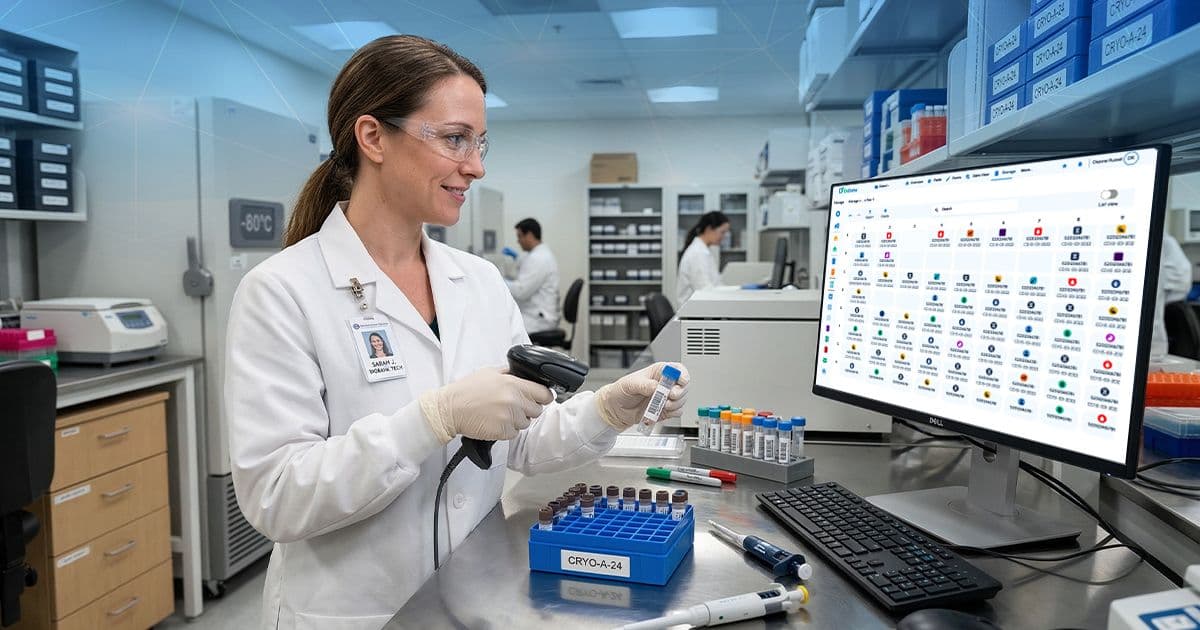
Biobanking has evolved from simple sample storage into a highly regulated, data-intensive, and operationally complex discipline. Today, biobanks must ensure full traceability, regulatory compliance, sample integrity, and real-time data accessibility, all while handling increasing volumes and tighter timelines.
Manual processes are no longer sustainable.
Automation, powered by a robust Laboratory Information Management System (LIMS), is becoming the backbone of modern biobanking operations.
The Operational Challenges Facing Modern Biobanks
Biobanking automation is no longer a future ambition. It is a present operational necessity.
Today’s biobanks must manage:
- High-volume biospecimen storage
- Multi-study and multi-site operations
- Strict chain-of-custody requirements
- Regulatory compliance (GDPR, ISO, 21 CFR Part 11)
- Real-time data access for researchers
Without automation, organizations face:
- Manual data entry errors
- Sample misidentification risks
- Storage inefficiencies
- Delayed sample retrieval
- Fragmented reporting
These inefficiencies directly affect research timelines, compliance posture, and operational scalability.
Where Automation Makes a Measurable Difference
A Laboratory Information Management System (LIMS) centralizes and automates the full biospecimen lifecycle.
Instead of relying on spreadsheets or fragmented databases, a LIMS enables:
- Automated sample accessioning
- Barcode-based tracking
- Digital workflow enforcement
- Freezer and storage mapping
- Real-time monitoring
- Integrated reporting and audit trails
The objective is not only digitization, it is workflow optimization and data integrity.
Key Benefits of LIMS for Biobanking Operations
1. End-to-End Sample Traceability
Traceability is fundamental in compliant biobanking environments.
With Di-LIMS, every step of the biospecimen lifecycle is digitally recorded:
- Collection
- Processing and aliquoting
- Storage and transfer
- Retrieval and distribution
Automated tracking strengthens chain-of-custody management and ensures full audit readiness.
2. Workflow Standardization and SOP Enforcement
Manual processes increase variability and risk.
Di-LIMS supports:
- Digitally embedded SOPs
- Automated task sequencing
- Mandatory data validation fields
- Role-based access control
This structured framework minimizes human error and improves operational consistency across sites.
3. Intelligent Freezer and Storage Management
Efficient storage management is critical to maintaining sample integrity.
Di-LIMS provides:
- Digital freezer mapping
- Rack and box visualization
- Capacity monitoring
- Rapid sample location tracking
When integrated with Di-Freeze, real-time temperature monitoring and automated alerts enhance sample protection.
This approach improves:
- Retrieval speed
- Storage utilization
- Risk mitigation
- Environmental control
4. Integrated and Scalable Research Ecosystem
Modern biobanking requires interoperability.
DiData’s ecosystem enables seamless integration with:
- Electronic Data Capture systems such as Di-EDC
- Laboratory instruments
- ERP platforms
- Clinical trial databases
This interconnected architecture eliminates data silos and ensures seamless information flow between operational and clinical environments.
Compliance and Data Integrity by Design
Regulatory frameworks such as GDPR, ISO standards, and 21 CFR Part 11 impose strict requirements on data management and traceability.
A LIMS-driven automation strategy supports compliance through:
- Secure audit trails
- Electronic signatures
- Controlled user permissions
- Structured documentation management
Rather than reacting to audit preparation, compliant biobanks operate in continuous inspection readiness.
Operational Impact: From Complexity to Control
Automation transforms biobanking into a controlled, scalable, and data-driven operation.
Automation as a Strategic Enabler
As biobanking operations continue to grow in scale and complexity, automation becomes a structural requirement for performance and regulatory confidence.
When workflows are optimized:
- Turnaround times decrease
- Sample loss rates are minimized
- Reporting becomes immediate and reliable
- Cross-site coordination improves
- Scalability becomes sustainable
These improvements are not isolated gains. They are the direct result of a structured, LIMS-based operational framework.
Such an approach supports:
- Complete lifecycle visibility
- Embedded SOP governance
- Intelligent storage oversight
- Continuous regulatory readiness
- Long-term operational resilience
With Di-LIMS, integrated within the broader DiData ecosystem, biobanks can transition from fragmented and manual processes to connected, compliant, and performance-driven environments.
In this context, automation is not merely a system upgrade. It establishes the operational foundation required to sustain research reliability and institutional growth.
Ready to transition from fragmented processes to a controlled, performance-driven environment? Discover how the DiData ecosystem can redefine your biobanking operations and request a demo now.
FAQ
What is biobanking automation?
Biobanking automation refers to the use of digital systems such as LIMS to manage, track, and optimize biospecimen workflows, ensuring traceability, efficiency, and regulatory compliance.
How does a LIMS improve sample traceability?
A LIMS uses barcode tracking, automated logs, and structured workflows to record every action performed on a sample, ensuring full lifecycle visibility and audit readiness.
Can LIMS support multi-site biobanks?
Yes. Configurable LIMS platforms like Di-LIMS support centralized oversight while allowing site-specific operational flexibility.
How does automation support regulatory compliance?
Automation maintains secure audit trails, electronic signatures, user access controls, and structured documentation aligned with regulations such as GDPR and 21 CFR Part 11.
Is LIMS integration possible with existing systems?
Yes. Modern LIMS solutions are designed to integrate with EDC systems, laboratory instruments, monitoring tools, and enterprise applications.